
A career question has a time horizon
What should I practice this month is different from which field should I enter or what should the next part of my working life mean. These books are useful precisely because they do not make the same proposal. Read them against the decision you face, including the constraints the author cannot know.
Three decisions, not three steps everyone must follow
The order below is not a prescribed career sequence. Some readers need a deeper commitment; others need exploration; others are renegotiating an identity formed around earlier success.

Build something valuable before expecting control
So Good They Can't Ignore You · Cal Newport
Cal Newport argues that rare and valuable skills can create career capital and, under the right conditions, more autonomy and satisfying work. The argument redirects attention from discovering a perfect passion to improving what one can offer. The conditions of the labor market still matter.
- Read it for
- The case for sustained skill development and career capital.
- Keep in mind
- Skill does not automatically create bargaining power, and the account fits some occupations better than others.

Examine what exploration can reveal
Range · David Epstein
David Epstein argues for the value of broad experience and delayed specialization in many complex domains. Read the differences between domains carefully: a pattern that fits a changing, uncertain environment may not apply to a field with stable rules and immediate feedback.
- Read it for
- The role of breadth, experimentation, and connections across fields.
- Keep in mind
- The argument is not that specialization is always a mistake or that wandering alone produces expertise.
Let the question change with the life
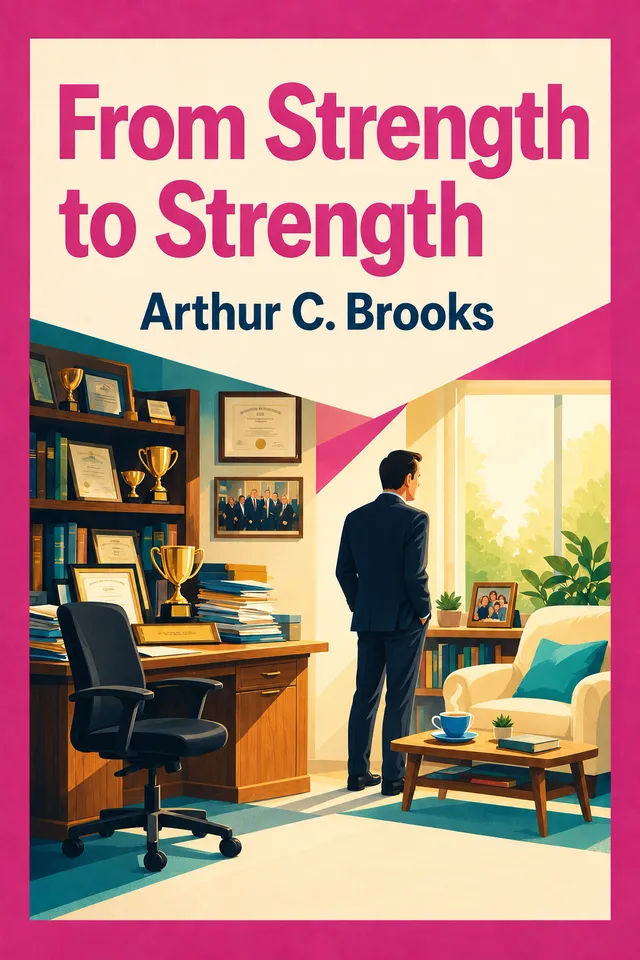
From Strength to Strength · Arthur C. Brooks
Arthur C. Brooks examines achievement, changing capacities, identity, and the possibility of a different orientation later in life. The reading is most useful when it opens a question about what success should mean now, rather than turning age into a rigid timetable.
- Read it for
- A reflection on changing work, achievement, and identity across a life.
- Keep in mind
- Broad accounts of aging and success do not determine an individual’s capacities, resources, or choices.
Why the advice can appear to conflict
Newport can sound like a case for depth while Epstein sounds like a case for breadth. The more useful comparison asks about the domain, the stage of learning, and what evidence would justify committing further. Brooks changes the objective itself rather than merely recommending another strategy for the same goal.
| Decision | Read first | Keep visible |
|---|---|---|
| How can I become more useful here? | So Good They Can’t Ignore You | The conditions under which skill earns autonomy |
| Do I know enough to commit to this field? | Range | The value and cost of another experiment |
| Does this version of success still fit? | From Strength to Strength | Personal obligations and available choices |
Sources and scope
Book ideas are attributed to their authors. External evidence is linked directly when a claim needs more than the source book.
- So Good They Can't Ignore You: Cal Newport argues that rare and valuable skills can create career capital and, under the right conditions, more autonomy and satisfying work. The argument redirects attention from discovering a perfect passion to improving what one can offer. The conditions of the labor market still matter. Scope: Skill does not automatically create bargaining power, and the account fits some occupations better than others.
- Range: David Epstein argues for the value of broad experience and delayed specialization in many complex domains. Read the differences between domains carefully: a pattern that fits a changing, uncertain environment may not apply to a field with stable rules and immediate feedback. Scope: The argument is not that specialization is always a mistake or that wandering alone produces expertise.
- From Strength to Strength: Arthur C. Brooks examines achievement, changing capacities, identity, and the possibility of a different orientation later in life. The reading is most useful when it opens a question about what success should mean now, rather than turning age into a rigid timetable. Scope: Broad accounts of aging and success do not determine an individual’s capacities, resources, or choices.
To report a factual, attribution, rights, or accessibility concern, email hello@wiseley.app.