What you'll learn
Key ideas from Greenlights
These ideas compress the book's argument without treating the author's view as settled fact. Use them as an orientation before reading the full work or listening in Wiseley.
Red and yellow lights can obstruct progress yet later disclose useful direction, without becoming pleasant or harmless through reinterpretation.
Chosen boundaries restore order and judgment, allowing identity to become practice rather than a label supplied by others.
A vocational greenlight becomes credible through practical work, preparation, rejection, and a product that proves commitment.
Choking begins when an outcome becomes an imaginary ceiling, while process-focused presence returns attention to the work itself.
Cross-cultural travel replaces quick judgment with attention to circumstances, local context, and humility about what remains unknown.
Pregnancy, family judgment, and new fatherhood reorder his commitments around family, care, and fewer competing ventures.
Durable success is measured by values, family, service, competence, and self-authorship rather than money, fame, or popularity alone.
Inside Greenlights
Read the first chapter in full here. The other 7 continue in the Wiseley app.
Chapter 1 of 8 · 3 min · Audio & text
The Greenlight Method
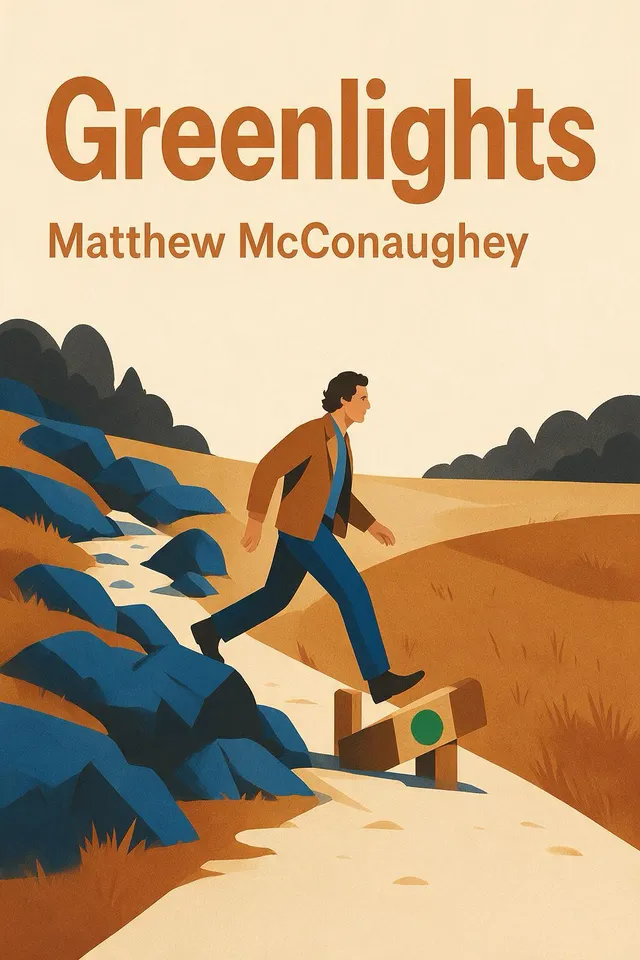
Greenlights, by Matthew McConaughey.
Greenlights begins with a question about how to live when life cannot be controlled. McConaughey presents it as a playbook built from autobiography, philosophy, and decades of journals, not a conventional memoir or universal instruction manual. He offers his interpretations for readers to examine, borrow, or reject.
The journals were not originally kept to preserve memories. He says he wrote them to forget: to place observations, poems, prayers, prescriptions, questions, beliefs, and bumperstickers outside himself. Returning to them later brought laughter, tears, and recognition, revealing patterns in how he pursued satisfaction, persisted, let go, and made personal agreements. The book grows from that rereading. Its authority is personal: it records what he witnessed, dreamed, pursued, gave, received, and learned, rather than claiming a formula for everyone.
The governing image is the traffic light. A greenlight permits movement and keeps a journey flowing. In life, it can mean approval, support, health, success, joy, a fresh beginning, or any circumstance that confirms a direction. Greenlights feel good because they remove interruption and let us continue with momentum.
But the metaphor includes the lights we would rather avoid. Yellow and red lights slow or stop us. They can appear as disagreement, illness, failure, disappointment, suffering, regret, or death. McConaughey does not say these experiences are pleasant or harmless. His claim is limited and retrospective: a blocked route may contain what a person needs, or its meaning may change with time. Yesterday’s red light can become tomorrow’s direction, even if it never becomes a pleasant memory.
That possibility leads to the book’s decision rule. When an outcome is inevitable, the choice is not always whether the situation will happen, but how to meet it. One response is persistence: continue pursuing the same result. Another is a pivot: take a different route toward a different or revised aim. The third is concession: accept what cannot be changed. Satisfaction depends on recognizing which response fits the moment, rather than treating perseverance as automatically virtuous.
McConaughey also balances agency with uncertainty. Skill, awareness, discipline, hard work, will, and course correction can help create better conditions and perhaps catch more greenlights. Yet timing matters, as do being in the right place, intuition, luck, fortune, karma, and fate. The method is neither total control nor passive surrender. It is an attempt to act deliberately while admitting that life contains forces beyond deliberate design.
The book’s life-and-death frame gives the metaphor its scale. Death is the shared destination; life is the individual journey and the record made along the way. Greenlights are not promises that every loss will feel good or every plan will succeed. They are a way of looking for usable direction in both permission and obstruction. The invitation is to notice the signal, choose a response, and remain open to its meaning changing later.
Chapter 2 of 8 · 4 min · Audio & textIn the app
Family Made the Framework
McConaughey’s first education in freedom began inside a family that was loving, demanding, volatile, and loyal at once. His parents’ arguments could become physical, then turn into embraces and sex.
Chapter 3 of 8 · 4 min · Audio & textIn the app
Constraint Reveals Identity
At the start of his senior year, McConaughey felt successful because grades, income, golf, appearance, romantic attention, and social energy reinforced his confidence. He traded his truck for a sports car and began relying on its image to create attraction.
Chapter 4 of 8 · 4 min · Audio & textIn the app
Permission to Pursue the Work
McConaughey’s first adult greenlight begins when a sensible life plan stops feeling honest. In ninth grade, he chose law and a future as a defense attorney, encouraged by family expectations and his skill as a debater.
Chapter 5 of 8 · 5 min · Audio & textIn the app
Preparation Meets Uncertainty
McConaughey presents opportunity as a compound event. Don Phillips admired his motorcycle trip and Dazed and Confused connection, declared him ready, and arranged a William Morris meeting.
Chapter 6 of 8 · 5 min · Audio & textIn the app
Travel Teaches Context
In his mobile life, McConaughey treats travel as a way to enter other people’s contexts. Living with Ms.
Chapter 7 of 8 · 5 min · Audio & textIn the app
Love Reorders the Life
McConaughey’s idea of a greenlight changes when the question is no longer how to advance, but what kind of life he is willing to build. In his mid-thirties, earlier relationships feel like temporary stops, and he wants a lifetime lover, best friend, and future mother.
Chapter 8 of 8 · 5 min · Audio & textIn the app
Author the Next Chapter
Success can itself become a red light. McConaughey says he enjoyed romantic comedies and valued the audience, money, and freedom they provided.
Chapter 1 of 8 · 3 min · Audio & text: The Greenlight Method
Wiseley supports reading and listening to summaries in the app.
Continue in WiseleyAbout Matthew McConaughey
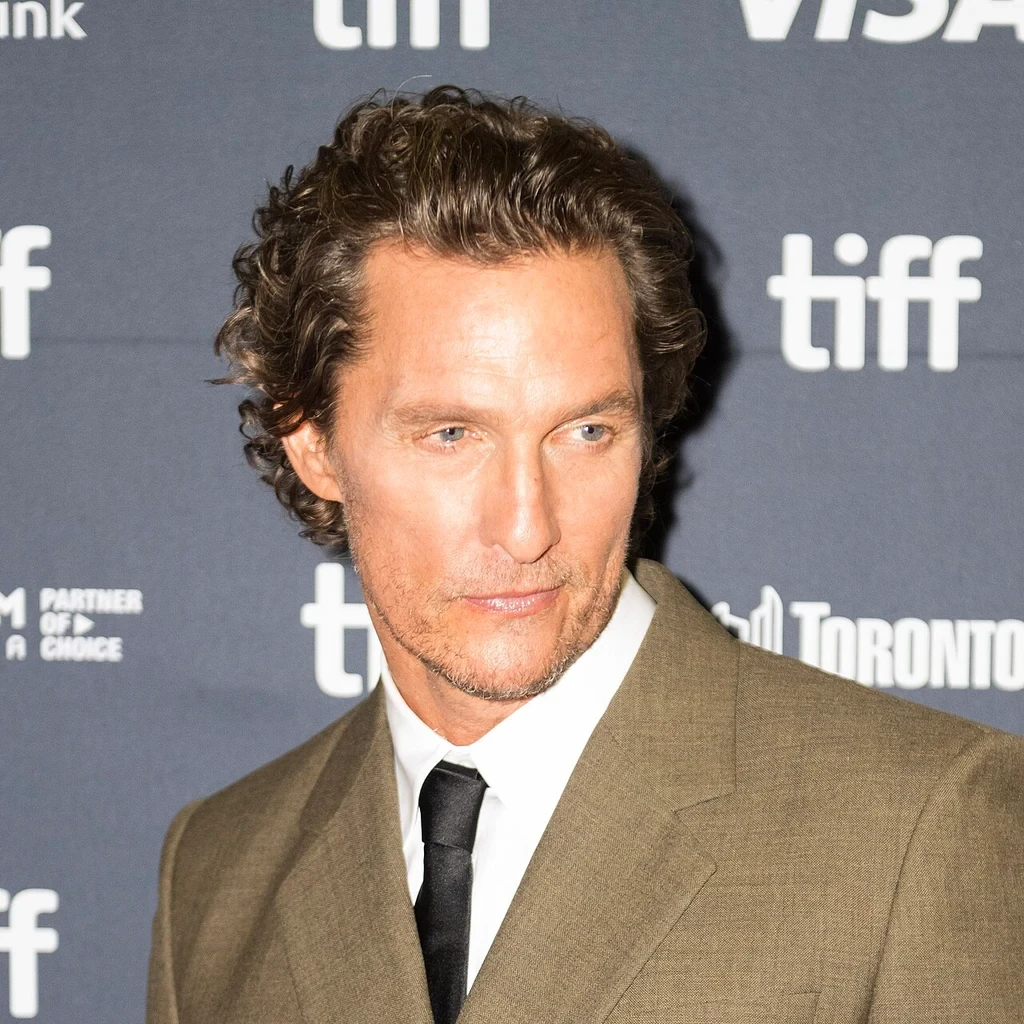
Matthew McConaughey is an American actor. “Greenlights” explores the experiences and reflections through which the author makes sense of his life.
Explore more books by Matthew McConaughey