A Tour of Space and Time
Travel from accessible introductions to the universe into the theories of motion, matter, spacetime, and the practical challenges of space exploration.
Books in this collection
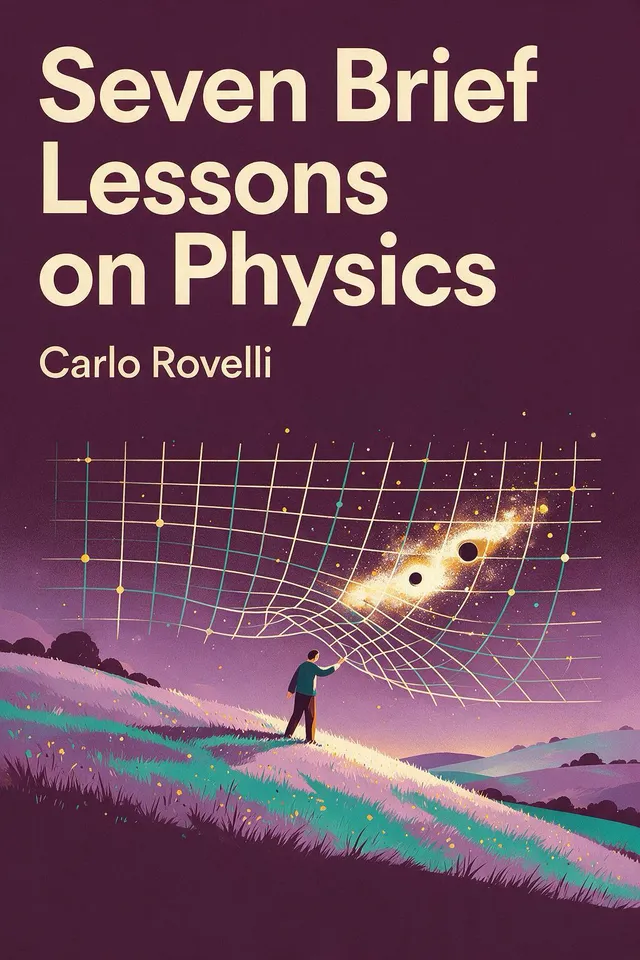
Seven Brief Lessons on Physics
An accessible tour of how modern physics unsettles ordinary ideas about space, time, matter, and the self. It asks what reality means when spacetime curves, quantum behavior is probabilistic, and time’s direction arises from heat and probability, then considers how consciousness, value, and curiosity fit within nature.
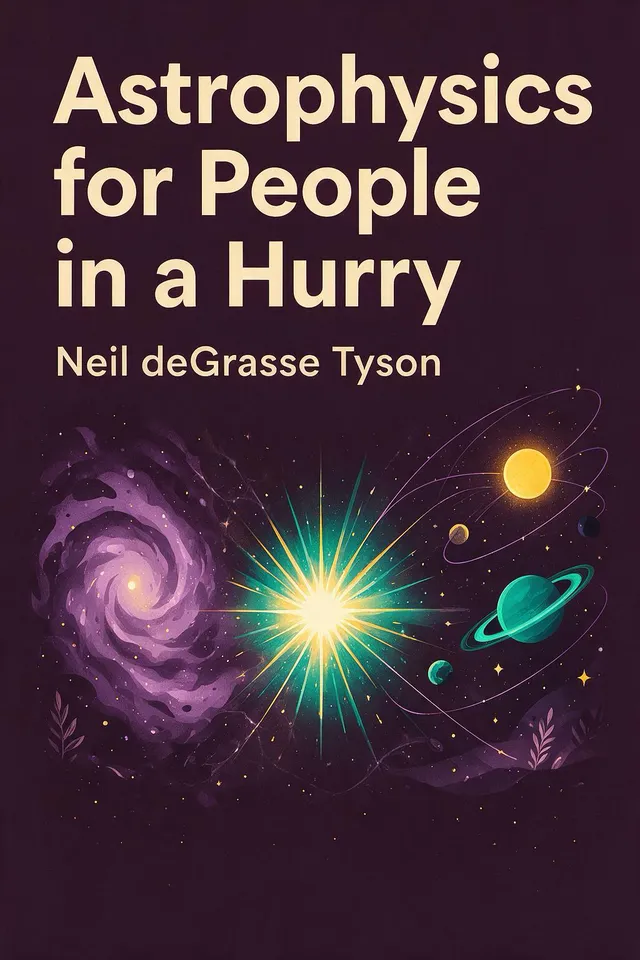
Astrophysics for People in a Hurry
This concise tour follows the universe from its hot beginnings through the making of elements, hidden dark matter and dark energy, stars, planets, and the search for distant life. It asks how we know what cannot be seen—and what a cosmic perspective changes about human identity and responsibility.
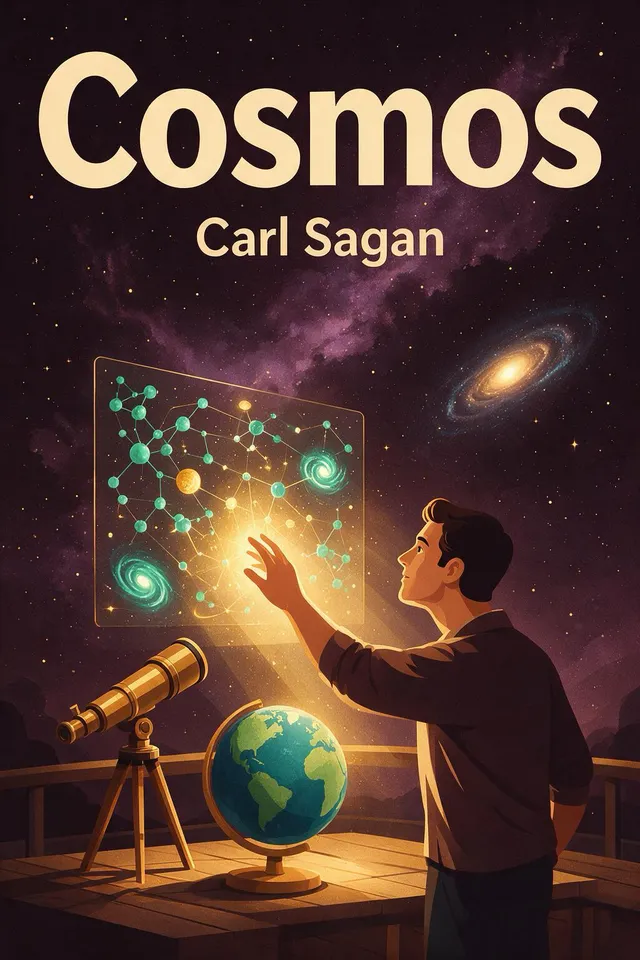
Cosmos
Cosmos traces how stars, planets, chemistry, life, intelligence, and civilization form one connected story. It asks how humans can know a universe that exceeds intuition—and how that knowledge should shape exploration, public reasoning, and the protection of Earth.
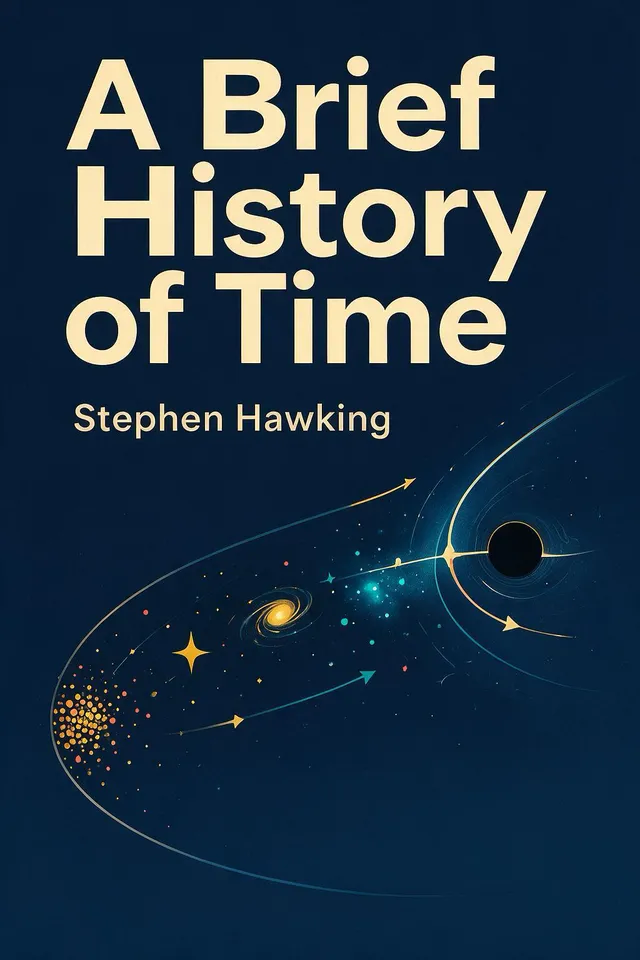
A Brief History of Time
This book traces how observation and theory reshape ideas about space, time, matter, black holes, and the universe’s origin. Its central question is whether one coherent framework can explain cosmic history. It maps the reasoning behind relativity, quantum uncertainty, entropy, and the limits of scientific prediction.
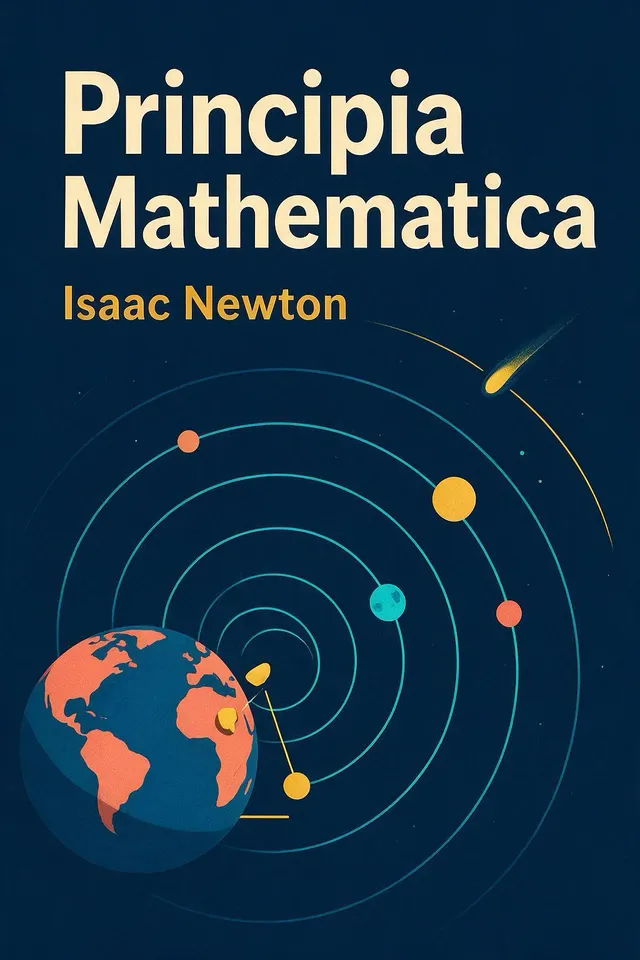
Principia Mathematica
Principia Mathematica asks how a small set of mathematical rules can explain motion on Earth, in fluids, and across the heavens. This summary follows Newton from definitions and laws of motion through inverse-square gravity, orbital geometry, resistance, tides, and comets, showing how observation and calculation turn phenomena into a coherent world-system.
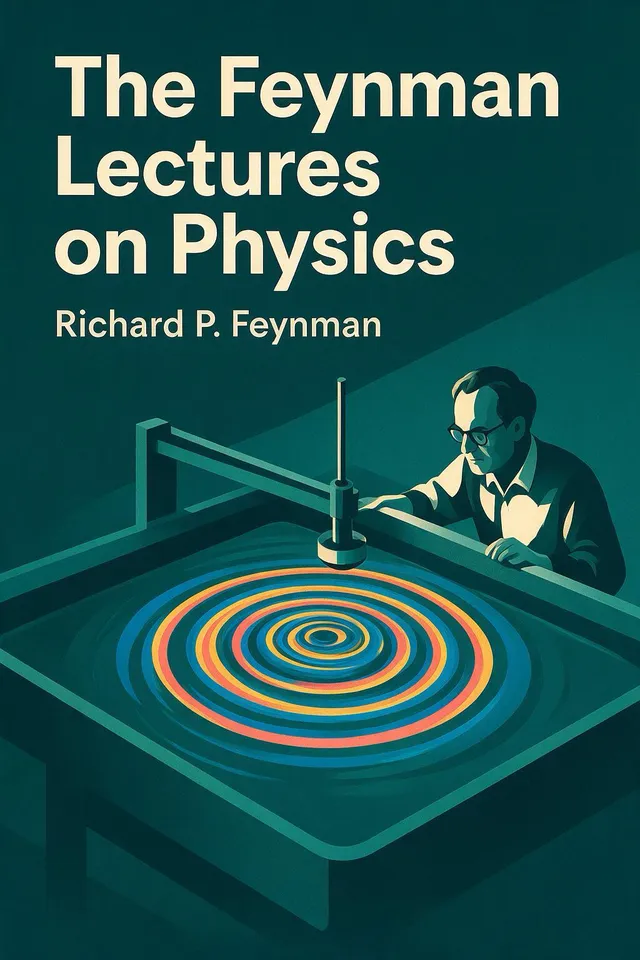
The Feynman Lectures on Physics
How can local laws explain forces, fields, waves, matter, machines, fluids, and gravity? The Feynman Lectures on Physics answers by building from electromagnetism through mathematical analogy, relativity, quantum and material models, showing how unified reasoning works—and where idealizations and incomplete theories limit explanation.
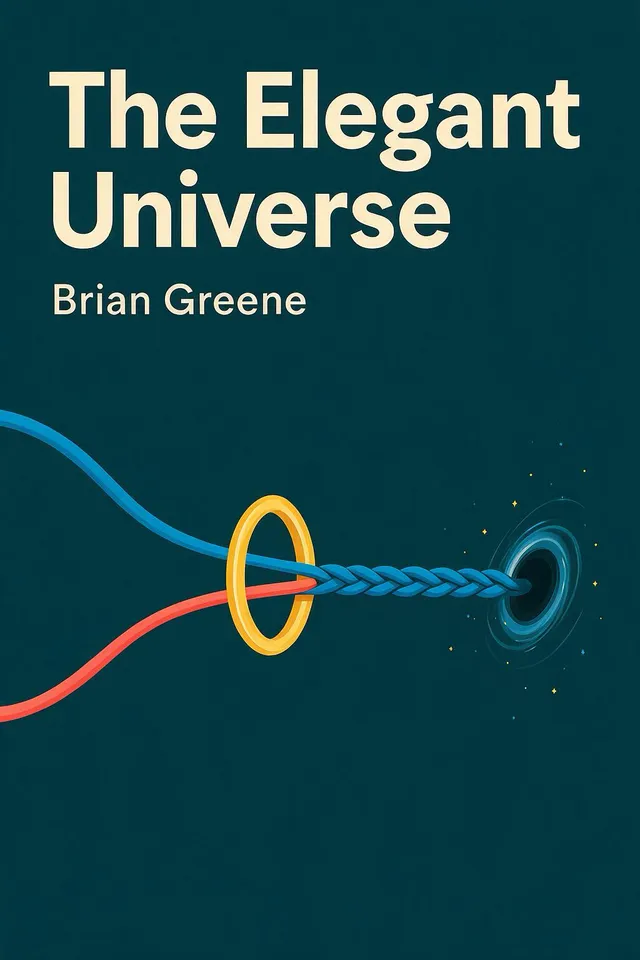
The Elegant Universe
An audio-first guide to modern physics, centered on one question: can a single framework reconcile quantum mechanics with relativity? It follows strings, extra dimensions, dualities, black holes, and cosmology, clarifying the theory’s explanatory reach alongside its unresolved predictions and tests.

The Order of Time
Carlo Rovelli asks what time is when relativity removes a universal clock, thermodynamics gives the past a direction, and quantum theory replaces smooth continuity with relations and events. The book follows these changes into memory, causality, identity, and the felt present, showing how familiar time can emerge without being fundamental.
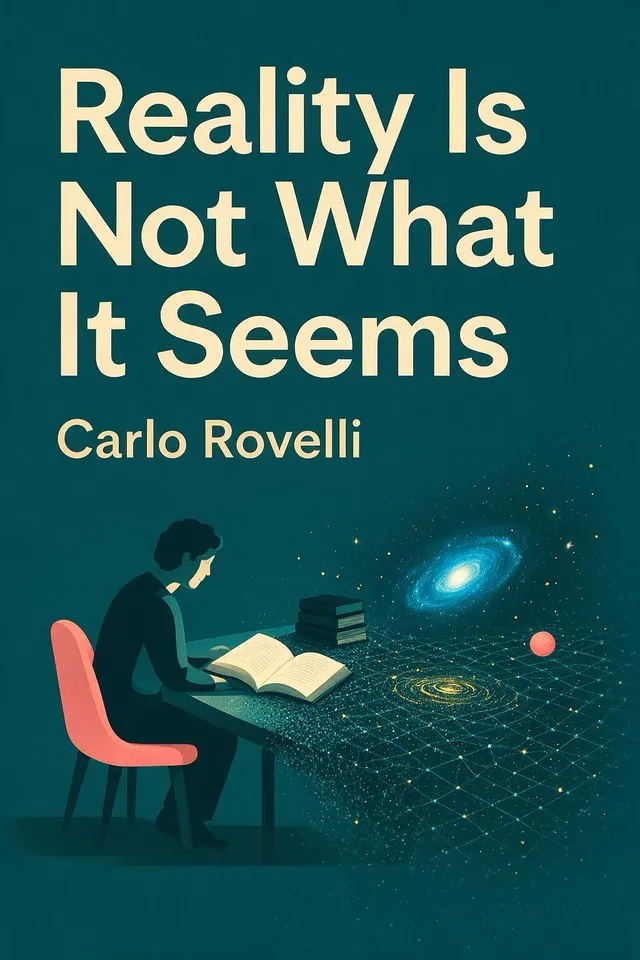
Reality Is Not What It Seems
Carlo Rovelli’s account of modern physics asks what remains of reality when atoms, space, time, and objects no longer behave as everyday intuition expects. Following the path from ancient atomism through relativity and quantum theory to quantum gravity, it shows how provisional models, relations, and uncertainty change what it means to understand the world.

Packing for Mars
Packing for Mars asks how humans can remain alive, capable, and psychologically intact beyond Earth. Mary Roach follows astronaut selection, confinement, weightlessness, motion sickness, impact survival, chronic bodily changes, reproduction, escape, toilets, and food to show that spaceflight is the redesign of ordinary needs under extreme constraints.