Get Your Focus Back
Understand distraction and protect your attention for what matters.
Books in this collection

Deep Work
Cal Newport’s Deep Work asks how people can learn difficult skills and produce valuable results when constant connectivity fragments attention. It argues for distraction-free concentration as both an economic advantage and a source of meaning, then develops practical systems for routines, attention training, tool selection, leisure, scheduling, and communication boundaries.
Digital Minimalism
Cal Newport’s Digital Minimalism asks how to use connected technologies without surrendering attention, solitude, conversation, or meaningful leisure. This audio-first summary follows the attention arms race, a values-based declutter, and practical ways to choose, constrain, and replace digital habits so technology serves a deliberately chosen life.
Indistractable
Indistractable asks why attention slips from chosen goals and how people can reclaim it. It explains the roles of internal discomfort, timeboxed values, external cues, and precommitments, then applies the framework to workplace culture, parenting, and intimate relationships—offering a practical way to protect attention in social settings.

Hyperfocus
Hyperfocus asks how to direct scarce attention in a world of interruptions. Chris Bailey presents deliberate concentration on one meaningful task alongside intentional mind wandering, then connects both modes to distraction-aware environments, restorative breaks, valuable information, creativity, and daily energy. The practical value is a framework for choosing, protecting, and renewing attention.

Stolen Focus
Stolen Focus asks why modern conditions make sustained attention difficult, and whether the problem is personal weakness or a damaged environment. Johann Hari connects distraction to speed, technology, exhaustion, stress, food, pollution, and constrained childhoods, then pairs practical habits with a case for collective change.
Essentialism
Essentialism asks how to direct limited time and attention toward what matters most when choices, demands, and opinions multiply. McKeown’s method combines discernment, deliberate trade-offs, active elimination, and easier execution, then applies the same logic to personal priorities, daily focus, and leadership.
The One Thing
The One Thing asks how extraordinary results are built when time, attention, and energy are limited. It proposes identifying the highest-leverage priority, asking a focusing question, and protecting the next action. The method connects purpose, priority, productivity, and counterbalancing to practical action at work and in life.
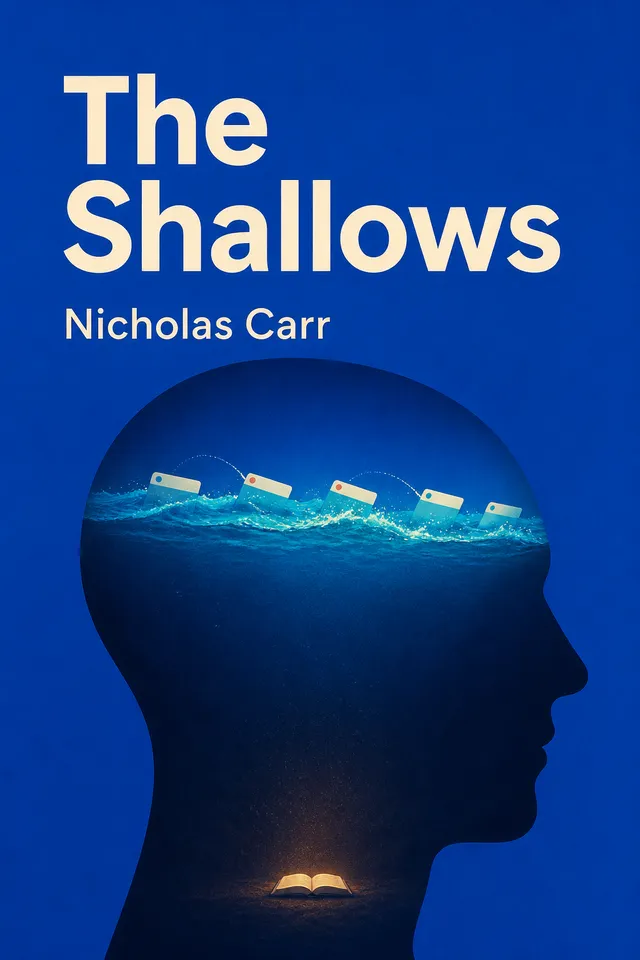
The Shallows
A source-grounded outline for an audio-first summary of Nicholas Carr’s The Shallows: how media technologies, especially the Internet, reshape attention, memory, reading, and judgment—and how to preserve depth while gaining digital efficiency.

Attention Span
Why is attention so hard to manage in digital life? Gloria Mark examines how cognitive limits, platform design, social expectations, and personal rhythms shape distraction. Her account offers practical ways to regain agency, balance demanding work with recovery, and make well-being a goal of technology use.

The Power of Unwavering Focus
The Power of Unwavering Focus presents focus as a trainable way to direct awareness, energy, and action. It asks how a person can choose meaningful priorities, resist distraction, and remain present. The summary traces the book’s spiritual model of the mind into practical routines for concentration, willpower, relationships, and work.