Run a Smarter Company
Compare approaches to goals, operations, management, and organizational culture.
Books in this collection

The Goal
The Goal follows plant manager Alex Rogo as he tries to save a failing factory while his family life is strained. It asks what productivity means when local efficiency harms the whole system, then develops bottleneck-focused measures and question-led reasoning for improving flow, financial results, and learning.
Measure What Matters
Measure What Matters explains how Objectives and Key Results turn broad missions into visible, measurable commitments, and how conversations, feedback, recognition, and culture keep the system humane. It asks how organizations can focus effort, coordinate across boundaries, pursue ambitious change, and learn when metrics or goals stop serving the work.
Working Backwards
Working Backwards asks how Amazon could preserve customer obsession, long-term judgment, and invention as it scaled. It explains the mechanisms behind that effort—hiring, autonomous teams, narratives, PR/FAQs, and input metrics—then tests them through Kindle, Prime, digital video, and AWS, offering a practical way to connect principles with daily decisions.
No Rules Rules
No Rules Rules examines how Netflix built a workplace around exceptional talent, candid feedback, transparency, and decentralized judgment. Its central question is when removing rules improves adaptation and innovation—and when freedom becomes chaos. The book’s practical value is a conditional framework for matching context, accountability, and cultural adaptation to the work.
My Years with General Motors
Alfred P. Sloan’s management-centered account of General Motors asks how a sprawling industrial corporation can innovate, compete, and survive changing markets without losing local initiative. It follows GM from Durant’s expansion and the 1920 crisis through product strategy, financial controls, technology, labor, global operations, and the judgment required to keep adapting.
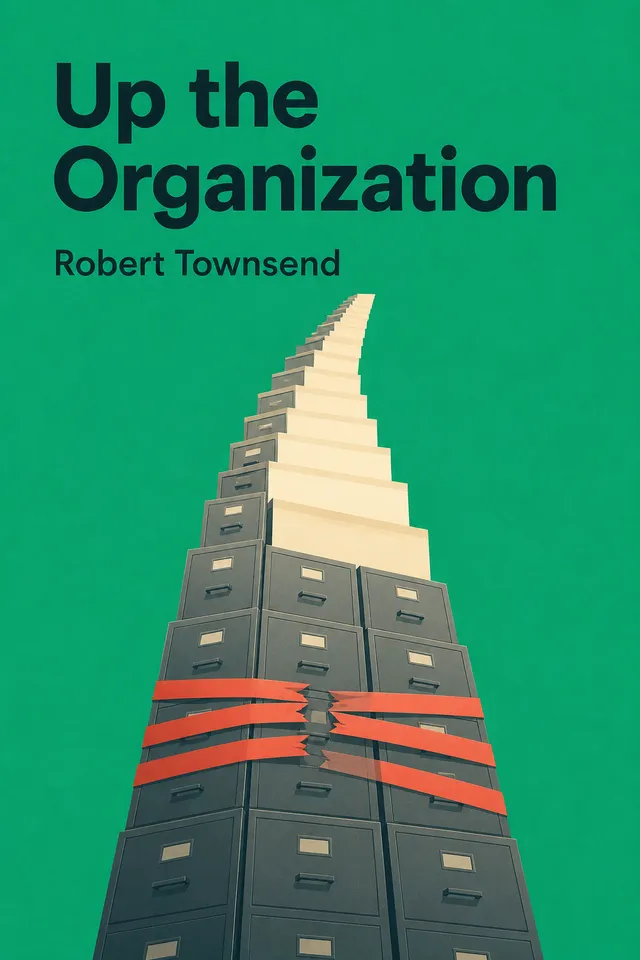
Up the Organization
Up the Organization examines how leaders can replace control, status, and bureaucracy with trust, accountability, direct communication, and shared ownership. Its central question is how organizations can release human capability without losing performance. The practical value is a framework for diagnosing obstacles and redesigning work around people.
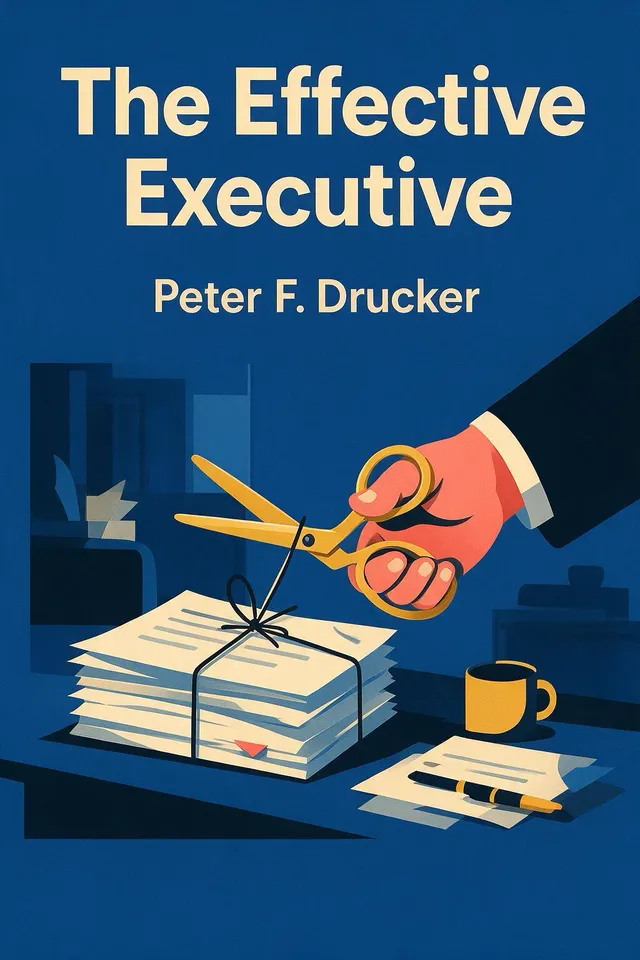
The Effective Executive
Peter F. Drucker asks how people in knowledge organizations can turn scarce time, specialized knowledge, and distributed responsibility into results. He presents effectiveness as a learnable discipline of contribution, strength, concentration, and decision-making, and connects it to organizational renewal, knowledge-worker productivity, and personal fulfillment.
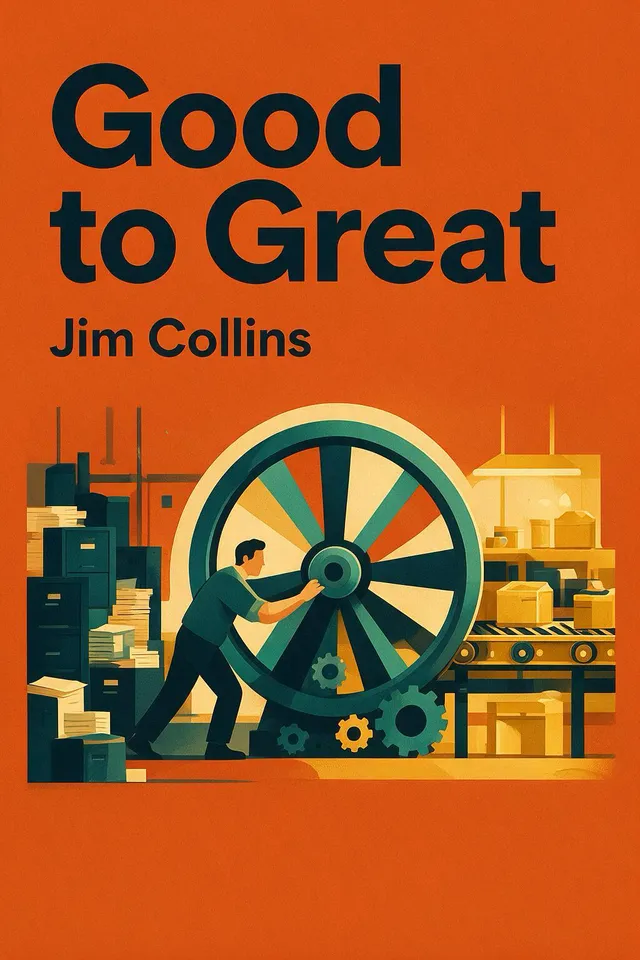
Good to Great
Good to Great asks why some established companies move from good performance to sustained greatness while comparable firms do not. It distills a research program into ideas about leadership, people, truth, focus, discipline, technology, and momentum, then considers how institutions endure and how people can find meaningful work.