The Stoic Way
Explore classical Stoic teachings and modern interpretations of judgment, adversity, character, and the things within our control.
Books in this collection
A Guide to the Good Life
How can a person live well when pleasure adapts, status shifts, and loss is unavoidable? William B. Irvine presents Stoicism as a practical philosophy of desire, attention, emotion, duty, and resilience, then adapts exercises such as negative visualization and control triage for modern life.
The Art of Living
The Art of Living recasts Stoic teaching as a practical question: what can a person govern when events, loss, status, and other people remain outside control? Its answer links clear judgment, disciplined desire, virtue, and humane duty to a steadier, freer way of acting in ordinary life.
Meditations
Marcus Aurelius’s Meditations asks how a person can remain rational, just, and humane while living amid power, pain, uncertainty, and death. It answers with a repeatable discipline: examine judgments, accept nature’s changes, serve the human community, and return to the present duty. The result is inward steadiness without withdrawal from life.
Letters from a Stoic
Seneca’s letters ask how to become free and happy when time, Fortune, pain, status, friendship, and death remain unavoidable. They develop Stoic answers through virtue, nature, self-examination, simplicity, disciplined study, courage, and humane fellowship—turning philosophy from abstract doctrine into a practice of living.
Discourses
Epictetus asks how a person can remain free when the body, possessions, status, and circumstances are vulnerable to others. This summary follows his answer: examine appearances, govern desire and assent, accept providential order, fulfill human roles, and turn philosophy into practiced conduct.
Lives of the Stoics
How does Stoicism look when tested by real lives rather than abstract maxims? Lives of the Stoics follows Greek and Roman thinkers, advisers, dissenters, exiles, and rulers through ambition, grief, political violence, and death, showing how virtue becomes practical judgment, public duty, inner freedom, and an ongoing practice of self-correction.
The Obstacle Is the Way
Ryan Holiday’s practical synthesis of Stoic ideas asks how an obstacle can become a route forward rather than a dead end. It explains how clear perception, deliberate action, and resilient acceptance help people find leverage, learn from setbacks, and keep serving a larger purpose under pressure.
Ego Is the Enemy
Ryan Holiday examines how ego distorts ambition, achievement, and adversity: when does confidence become self-deception, and how can people keep doing meaningful work? The book’s answer joins humility with disciplined action, continual learning, purpose, internal standards, and letting go of praise, blame, and resentment.
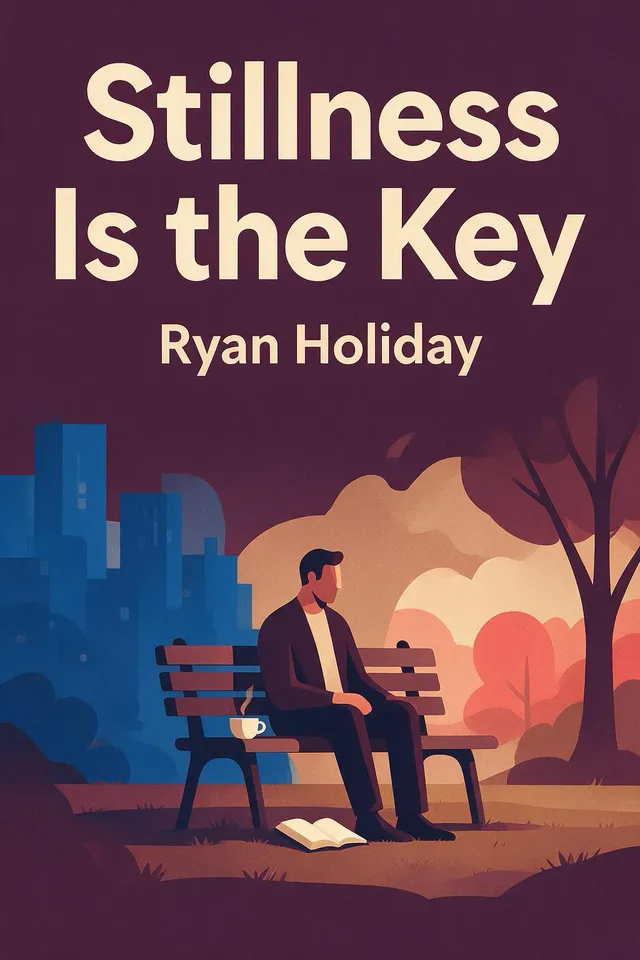
Stillness Is the Key
Ryan Holiday examines stillness as a trainable condition of clear attention, moral steadiness, and embodied balance. How can a person remain calm and effective amid noise, pressure, desire, and uncertainty? The answer connects mental discipline, spiritual practice, relationships, routines, rest, courageous action, and mortality.

The Daily Stoic
The Daily Stoic asks how Stoic philosophy can become a daily practice: what belongs to our choice, how should we examine impressions and desires, and how can adversity become useful action? Its value is a practical framework for steadier judgment, disciplined habits, contentment, and humane conduct.