What Can We Really Know?
Question the foundations of knowledge through philosophy, scientific skepticism, explanations of reality, and the puzzles of minds and formal systems.
Books in this collection
The Demon-Haunted World
The Demon-Haunted World asks how people can distinguish reliable knowledge from comforting stories in a technologically powerful society. Sagan joins wonder to skepticism, then traces the question through UFOs, memory, education, media, scientific responsibility, and democratic freedom. The practical value is a disciplined way to test claims without losing humane curiosity.
Discourse on the Method
An English audio-first, source-grounded summary of René Descartes’s Discourse on the Method, with the supplied Meditations and preface as substantive continuation. It follows a search for certainty through disciplined reasoning and asks how clear principles can guide knowledge, science, and practical judgment.
Critique of Pure Reason
Immanuel Kant’s Critique of Pure Reason asks how necessary knowledge is possible in mathematics, science, and experience, and where pure reason must stop. It explains space, time, categories, and experience, then examines the soul, world, and God while redirecting reason toward systematic inquiry and moral hope.
Gödel, Escher, Bach
How can finite rules produce meaning, creativity, and a mind that seems to look back at itself? Gödel, Escher, Bach traces that question through formal systems, Bach’s music, Escher’s art, DNA, brains, and AI, giving readers a way to compare truth, interpretation, and consciousness across levels.
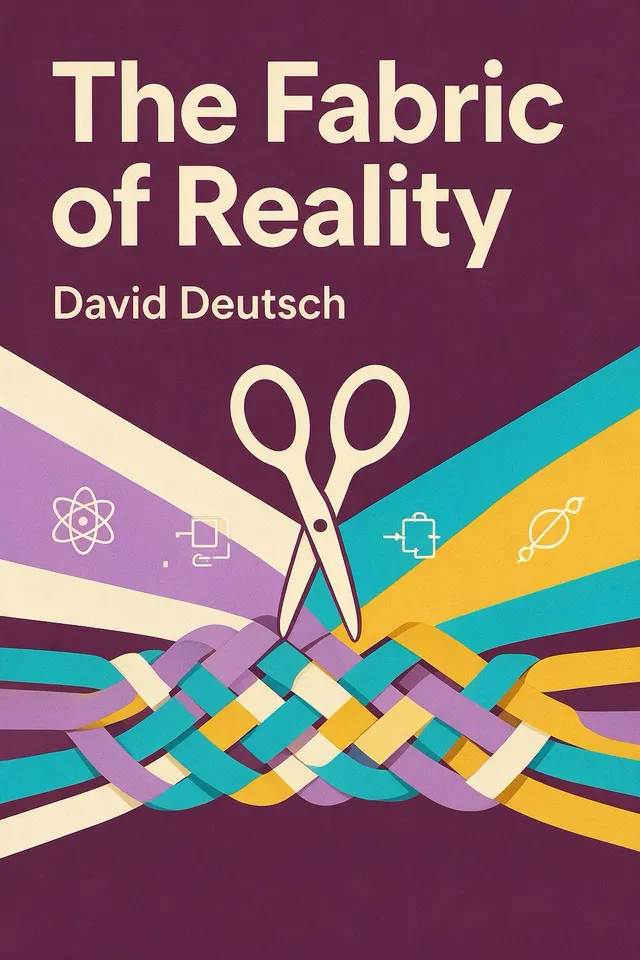
The Fabric of Reality
The Fabric of Reality asks how a unified account of quantum physics, computation, evolution, and knowledge can explain what is real, how understanding grows, and how time and life fit together. Its value is a cross-disciplinary framework for judging explanations, limits, possibilities, and human agency.
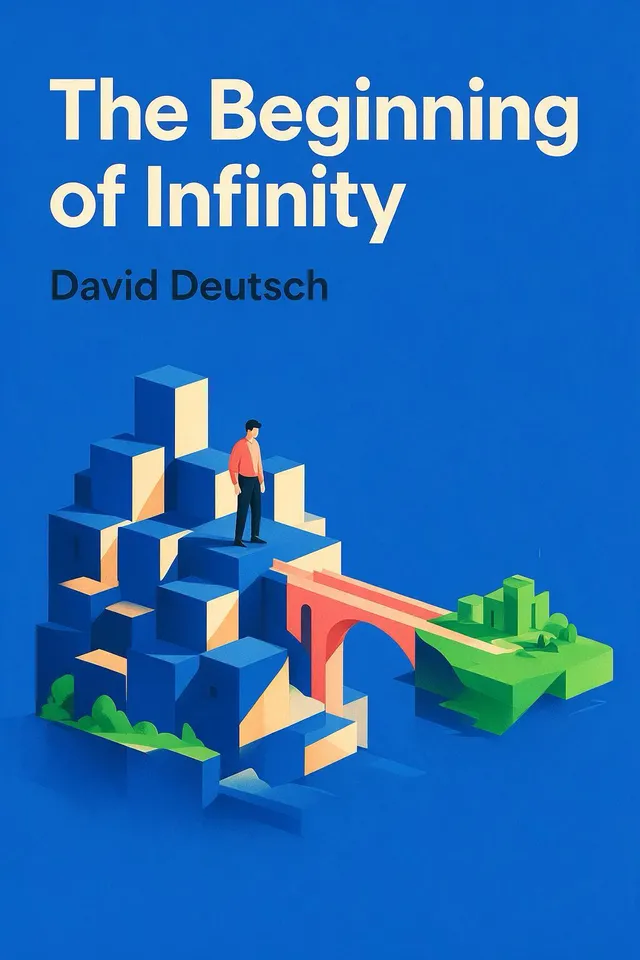
The Beginning of Infinity
David Deutsch argues that open-ended progress begins with good explanations: ideas that withstand criticism, reach beyond immediate experience, and enable new creation. The book asks why humans can solve problems, build universal systems, form institutions, and extend knowledge indefinitely—and what keeps that possibility alive.