Books worth understanding, not just finishing.
Explore 987 carefully structured book summaries. Discover the central ideas and themes, then decide what deserves a full read.
All book summaries

The Science of Storytelling
Why do some stories hold our attention and change how we see people? Will Storr connects storytelling to perception, curiosity, identity, and social emotion. His character-centered approach shows how flawed beliefs generate conflict, how language builds imagined worlds, and how writers can turn psychological insight into narrative choices.

The Screwtape Letters
Through an ironic correspondence from an unreliable infernal perspective, the book asks how temptation turns attention, habits, pleasure, social belonging, and faith against themselves. It maps the counterforces—reality, humility, repentance, charity, prayer, and steady obedience—that restore moral agency in ordinary life.

The Second Machine Age
Why do digital technologies create both extraordinary abundance and widening inequality? This summary follows the book’s account of exponential computing, digitization, innovation, productivity, labor markets, and superstar firms, then examines how education, organizations, taxes, entrepreneurship, and public institutions can help people work with machines and share their gains.

The Secret
Rhonda Byrne’s The Secret asks whether a universal law of attraction makes dominant thoughts and feelings the source of lived circumstances. It moves from that claim to Ask–Believe–Receive, gratitude, and visualization, then applies the model to money, relationships, health, society, identity, and purpose. The outline separates the proposed mechanism from its practices and qualifications.
The Self-Driven Child
Why do capable children lose motivation, struggle under pressure, or resist help—and how can parents support them without taking over? Stixrud and Johnson argue that a child’s sense of control shapes stress, learning, and independence. The book offers practical ways to share decisions, reduce pressure, support motivation and rest, and prepare for school, technology, tests, and adulthood.
The Selfish Gene
The Selfish Gene asks how evolution can produce selfishness, altruism, cooperation, and culture when selection favors replicators. Dawkins follows that question from early self-copying molecules through genes, survival machines, kin and sexual conflict, reciprocal cooperation, memes, and effects beyond the body—offering a framework for separating evolutionary explanation from moral instruction.

The Seven Circles
The Seven Circles asks how wellness can restore balance while honoring Indigenous knowledge, lived circumstance, and community. Chelsey Luger and Thosh Collins connect movement, land, community, ceremony, sacred space, sleep, and food in an adaptable framework for personal and collective healing, with attention to colonial harms, cultural boundaries, and future generations.
The Seven Principles for Making Marriage Work
What keeps a marriage connected when conflict, unequal needs, and enduring differences cannot be eliminated? This summary presents Gottman’s research-based framework of friendship, positive regard, shared influence, repair, respectful acceptance, and shared meaning, then distills practical ways couples can understand and strengthen their relationship.
The Shallows
A source-grounded outline for an audio-first summary of Nicholas Carr’s The Shallows: how media technologies, especially the Internet, reshape attention, memory, reading, and judgment—and how to preserve depth while gaining digital efficiency.

The Shock Doctrine
Naomi Klein investigates how war, economic collapse, and natural disaster can become openings for rapid market reform, privatization, and corporate power. The summary asks how shock weakens democratic choice—and how historical memory, popular organization, and community-led reconstruction can help people regain control over markets and public life.
The Shortest History of Economics
The book traces how technology, trade, institutions, and policy have shaped economies from agriculture to the pandemic era. It asks why rising productivity and exchange can lift living standards while leaving inequality, crises, and environmental harms. Its historical cases give listeners tools for thinking about incentives, market failures, public choices, and uncertainty.

The Silk Roads
Peter Frankopan re-centers world history on the connected zone from the Mediterranean through Central Asia to China, asking how routes for trade, faith, war, disease, and resources redirected power. The summary explains Europe’s contingent rise and why Asia’s strategic centrality is returning.
The Singularity Is Near
Ray Kurzweil asks what happens when exponential technological progress carries intelligence beyond biology. The book connects computing, brain reverse engineering, genetics, nanotechnology, and robotics to longer life, altered identity, cosmic expansion, and serious risks—offering a framework for judging both the promise and governance of a possible human-machine Singularity.
The Singularity Is Nearer
Ray Kurzweil asks whether accelerating computation will bring human minds into partnership with AI, and what that change means for identity, work, health, prosperity, and safety. The book explains the mechanisms behind that forecast, tests its optimism against evidence and counterarguments, and considers how people might shape the transition.
The Six Pillars of Self-Esteem
How do people become confident in their ability to think, cope, and pursue happiness—and why does that confidence sometimes collapse? This summary presents Branden’s six practices for building self-esteem, then traces their implications for parenting, education, work, therapy, culture, and daily self-direction.
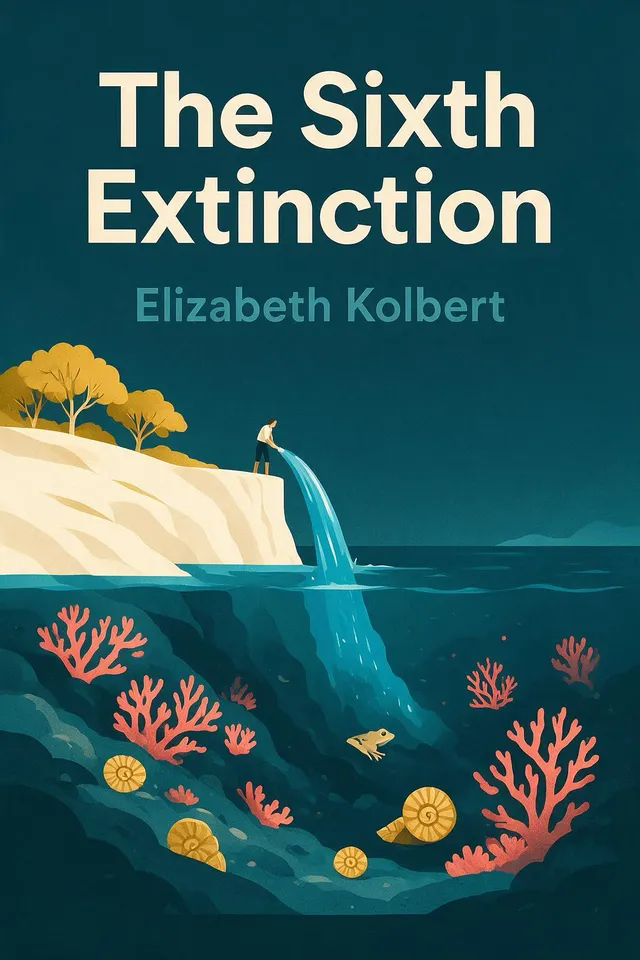
The Sixth Extinction
This book asks whether human activity is driving a sixth mass extinction. Moving from fossil discoveries and ancient catastrophes to amphibians, oceans, forests, invasions, megafauna, and conservation, it examines how rapidly life can adapt—and what it means that one species is reshaping the evolutionary future of all the others.

The Slight Edge
The Slight Edge asks why ordinary choices so often separate thriving from struggle. Jeff Olson argues that small actions, repeated long enough to compound, shape health, money, relationships, work, and happiness. The book turns that principle into practical guidance on habits, goals, learning, responsibility, and contribution.
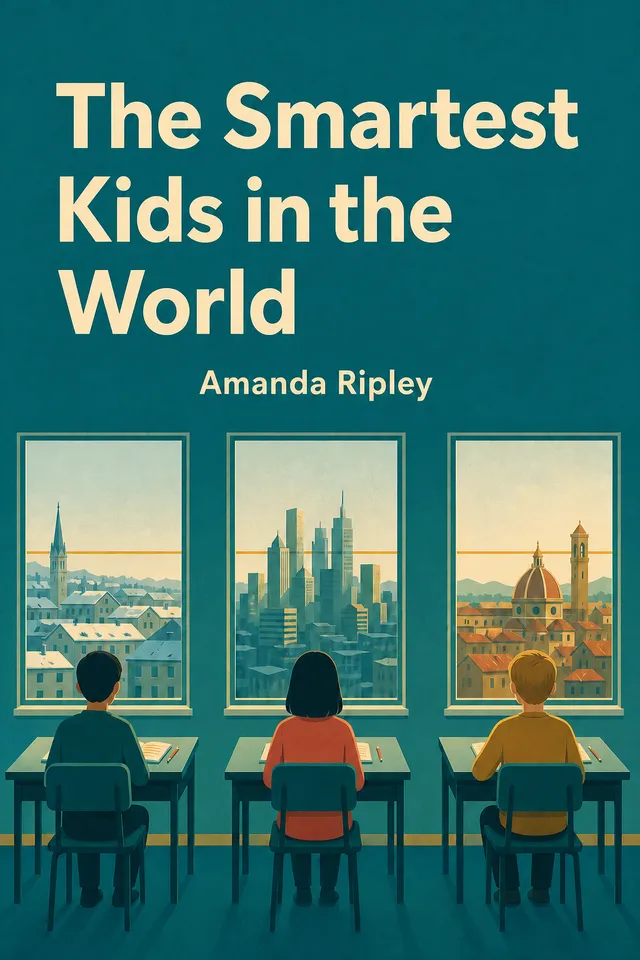
The Smartest Kids in the World
Amanda Ripley compares schools in the United States, Finland, South Korea, and Poland to ask why some systems teach nearly all students to think critically while others spend heavily yet leave many unprepared. The book traces the answer through teachers, family habits, peer culture, equity, and meaningful consequences, then offers a practical lens for judging schools.