Books worth understanding, not just finishing.
Explore 987 carefully structured book summaries. Discover the central ideas and themes, then decide what deserves a full read.
All book summaries
The Female Brain
How does changing biology shape women’s experiences across life? Louann Brizendine connects hormones and brain development with emotion, relationships, sexuality, caregiving, and aging. This summary explores her explanations, their qualifications, and their implications for communication, support, and informed choices.

The Feynman Lectures on Physics
How can local laws explain forces, fields, waves, matter, machines, fluids, and gravity? The Feynman Lectures on Physics answers by building from electromagnetism through mathematical analogy, relativity, quantum and material models, showing how unified reasoning works—and where idealizations and incomplete theories limit explanation.

The Fifth Agreement
The Fifth Agreement asks how people can tell truth from interpretations built through words, beliefs, and other people’s opinions. It presents five practices for changing self-talk, releasing personal offense, questioning assumptions, adapting effort to one’s capacity, and listening skeptically. Ruiz then traces how these practices can support self-acceptance, respect, and deliberate change.
The Fifth Discipline
Peter Senge’s argument asks how organizations can create desired futures instead of reacting to events and repeating inherited failures. It connects systems thinking with personal mastery, mental models, shared vision, and team learning, then extends those ideas to leadership, organizational change, sustainability, and collective responsibility.
The Fine Art of Small Talk
Debra Fine argues that small talk is not empty chatter but a learnable bridge to trust, friendship, opportunity, and deeper conversation. The book shows how to initiate, ask and follow up, listen visibly, share attention, repair conversational missteps, and carry promising connections into work, dating, and everyday life.
The First 2 Hours
The First 2 Hours asks how to make the workday serve important work instead of incoming demands. Donna McGeorge’s answer is to match tasks to changing energy: protect the first block for consequential focus, use later blocks for people and routine work, then close by preparing tomorrow. The framework is practical but meant to flex with individual rhythms.

The First 90 Days
The First 90 Days examines how leaders enter a new role, learn the organization, diagnose its situation, build credibility, align people and systems, and manage themselves. It asks how a vulnerable transition can become early momentum and lasting organizational value, offering a practical way to decide what to learn, whom to align, and what to change first.
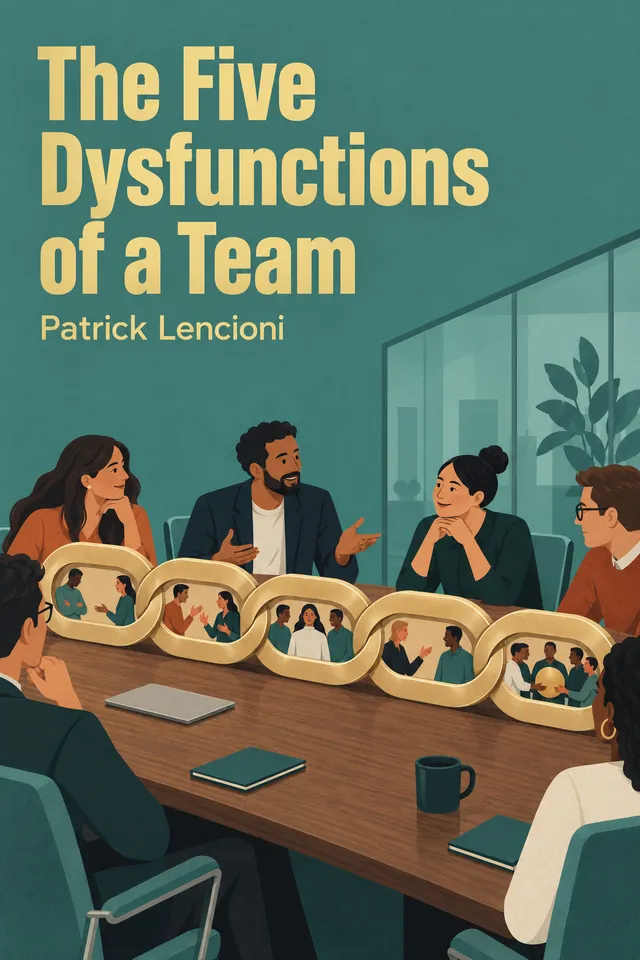
The Five Dysfunctions of a Team
Why can a capable executive team fail despite talent, resources, and strategy? This summary follows DecisionTech's repair effort and explains how vulnerability-based trust, candid conflict, commitment, accountability, and collective results form a linked framework for diagnosing and improving teamwork.

The Five Love Languages
The Five Love Languages examines why affection can fade after marriage and asks how spouses can make love recognizable to one another. It proposes five primary languages—words, time, gifts, service, and touch—and applies them to conflict, repair, and parenting, offering a practical method for translating intention into connection.

The Four Agreements
The book presents human suffering as the result of inherited agreements—fearful beliefs, judgments, and assumptions—that shape a personal dream. It asks how language and daily behavior can loosen that conditioning, and offers four practices for reclaiming self-trust, clearer relationships, emotional freedom, and a more loving way to inhabit life.

The Four Loves
The Four Loves examines Affection, Friendship, Eros, and divine Charity, asking how human attachments can express goodness without becoming ultimate authorities. Lewis distinguishes need, gift, and appreciative attention, then traces how love can enlarge life, distort into control or idolatry, and be reordered through humility, fidelity, and grace. These distinctions clarify where to honor loyalty and where to resist its claims.

The Free-Time Formula
The Free-Time Formula asks how to create usable free time when responsibilities and ambitions compete. Its seven-step approach moves from auditing current time and choosing vital goals to prioritizing health, removing low-value work, scheduling and defending focus, and creating a sustainable rhythm for achievement and recovery.

The Freedom of Self-Forgetfulness
Why does the self keep seeking proof of its worth, and what could free it from that pursuit? Timothy Keller traces the ego’s dependence on comparison and recognition, then presents Christian humility as freedom from human verdicts through acceptance in Christ—a perspective that can reshape responses to criticism, achievement, and others’ success.

The Freedom Writers Diary
Built from students’ diary entries and their teacher’s account, The Freedom Writers Diary asks how classrooms can respond to violence, racism, and low expectations. It follows writing and relevant reading into empathy, solidarity, public action, and educational possibility, while showing that belonging and ambition coexist with grief, trauma, and material barriers.

The Gap and the Gain
The Gap and the Gain asks why achievement often fails to produce lasting happiness. It contrasts measuring yourself against moving ideals and future outcomes with measuring backward from your own progress, then shows how wanting, daily wins, gratitude, and transformed setbacks can support agency and continued growth.

The Gene
The Gene follows heredity from ancient theories and Mendel’s peas through chromosomes, DNA, genome sequencing, gene therapy, diagnosis, and genome editing. Its central question is how genetic information becomes a living person—and what changes when people can read, select, or rewrite it. It distinguishes genetic influence from environment, chance, and social judgment while keeping genetic power’s risks in view.

The Gift of Fear
The Gift of Fear asks how people can recognize danger before violence erupts, and why they sometimes dismiss early unease. It presents intuition as fast, context-sensitive judgment, then develops ways to assess threats, pursuit, and violence at work, at home, among young people, and around public figures—while distinguishing useful fear from worry.

The Gifts of Imperfection
Brené Brown examines how to live wholeheartedly when shame, perfectionism, comparison, and fear encourage hiding, overwork, and disconnection. The book asks whether worthiness can be claimed before achievement, then maps practices of vulnerability, compassion, gratitude, creativity, rest, meaningful work, and joyful expression that make authentic connection more possible.