Books worth understanding, not just finishing.
Explore 987 carefully structured book summaries. Discover the central ideas and themes, then decide what deserves a full read.
All book summaries
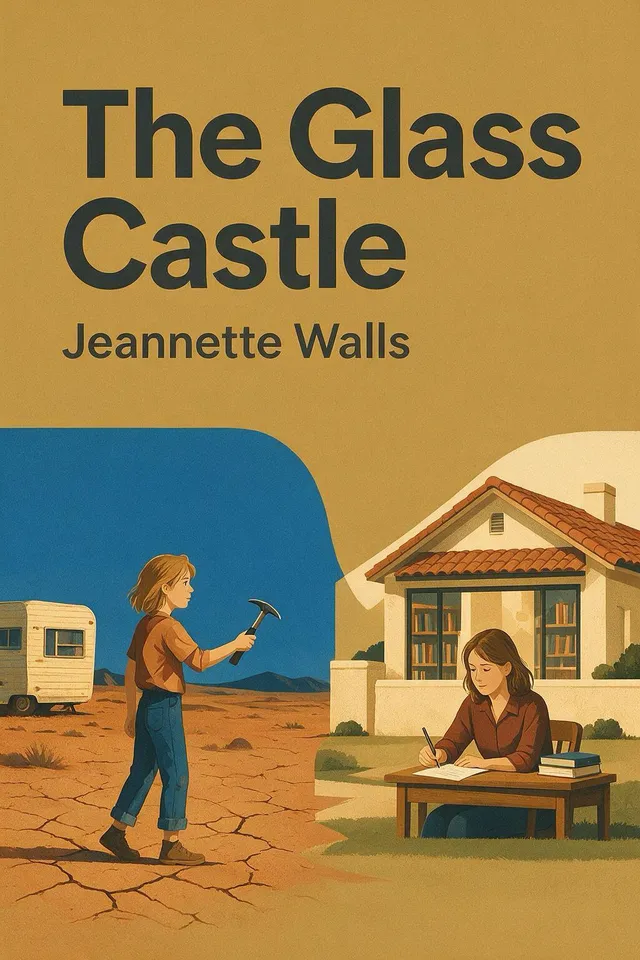
The Glass Castle
The Glass Castle follows Jeannette Walls from a childhood of mobility, poverty, danger, and imaginative family instruction to an adult life built beyond her parents’ control. It asks how love and harm can coexist, and how inherited resourcefulness can become agency without denying the costs of neglect.
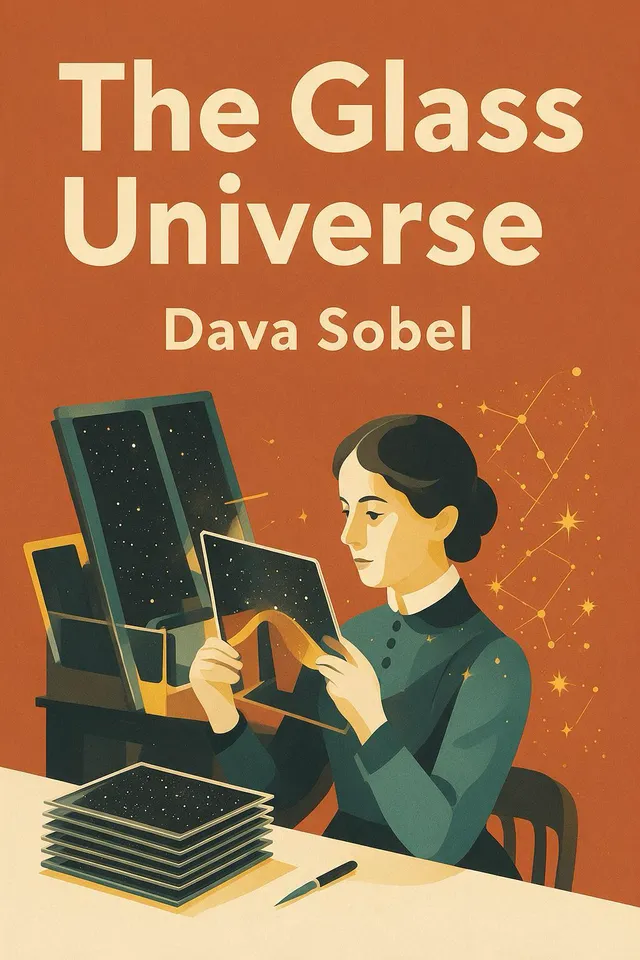
The Glass Universe
How did a nineteenth-century observatory turn glass plates into knowledge about stars—and make room for women to shape that knowledge? This summary follows spectral classification, variable stars, Leavitt’s distance relation, Shapley’s galactic map, and Payne’s stellar-atmosphere work, showing how routine measurement and institutional choices changed ideas of cosmic scale.

The Goal
The Goal follows plant manager Alex Rogo as he tries to save a failing factory while his family life is strained. It asks what productivity means when local efficiency harms the whole system, then develops bottleneck-focused measures and question-led reasoning for improving flow, financial results, and learning.
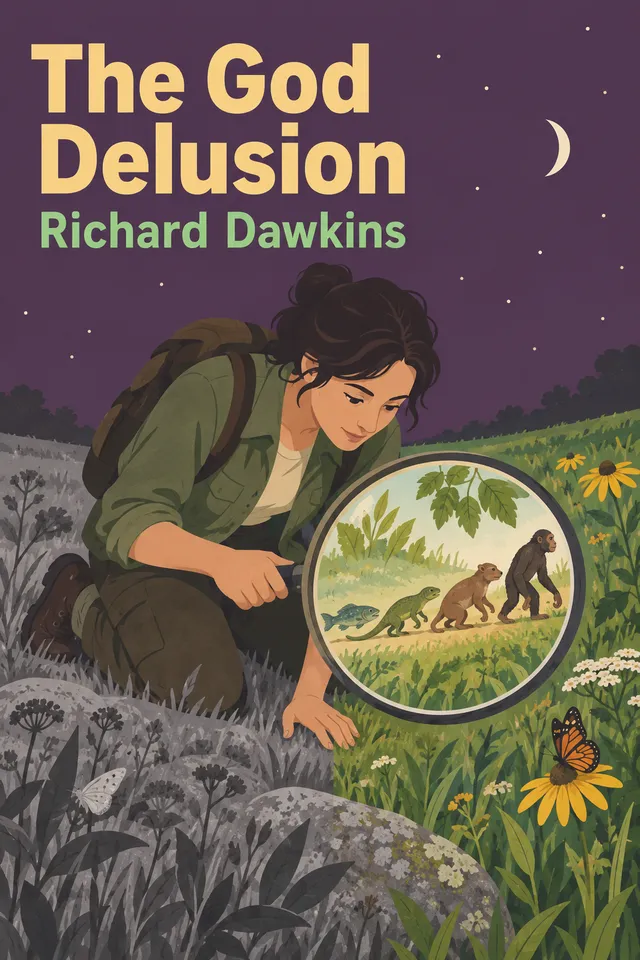
The God Delusion
Richard Dawkins asks whether a supernatural creator best explains the world, whether morality depends on God, and why religious belief persists. He tests arguments and experiences against scientific and evolutionary reasoning, then considers scripture, changing moral norms, religious authority over children, and secular sources of meaning and wonder.
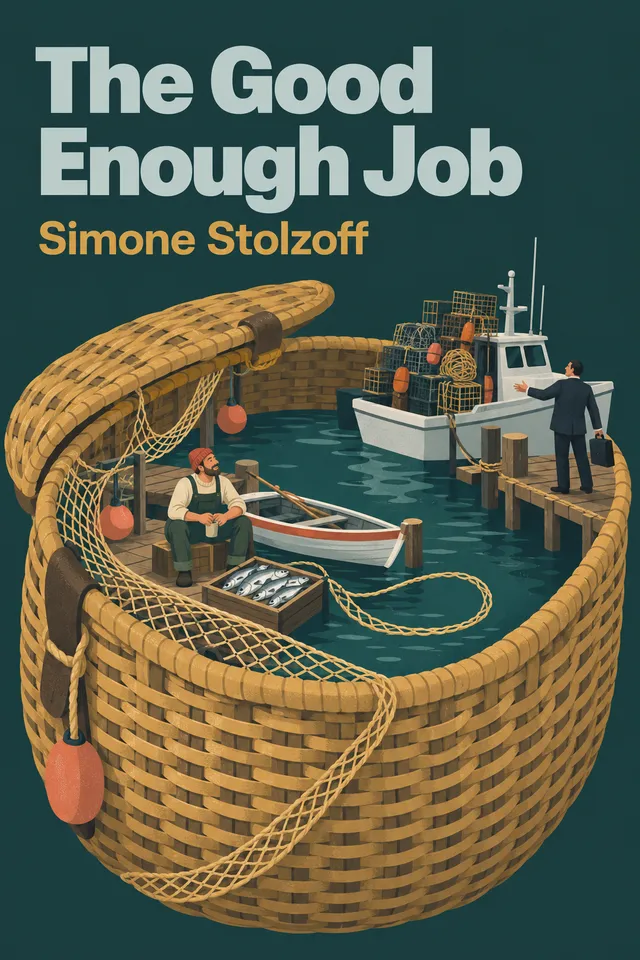
The Good Enough Job
The Good Enough Job asks how work can matter without becoming a person’s whole identity. Simone Stolzoff examines how calling, achievement, workplace belonging, long hours, and status shape that relationship, then considers personal, workplace, and policy choices that make room for a life beyond work.

The Great Gatsby
Nick Carraway recounts how Jay Gatsby’s wealth, crowded parties, and remade identity serve his hope of reclaiming Daisy Buchanan. The story asks what happens when longing turns the past into a plan, and how class and privilege shape both the pursuit of a dream and the costs borne by others.
The Great Influenza
The Great Influenza is a history of the 1918 pandemic and the scientific transformation that preceded it. It asks how a modern medical system, a mobilized nation, and a fast-changing virus produced catastrophe—and what disciplined science, honest communication, and preparedness can learn from that failure.
The Greatest Show on Earth
Richard Dawkins asks how we can know evolution happened and how natural selection turns inherited variation into adaptation. Drawing on geological clocks, living experiments, fossils, embryology, biogeography, anatomy, and molecular comparisons, the book builds a cumulative case for common descent and explains why life’s complexity coexists with historical imperfections.

The Greatness Mindset
The Greatness Mindset asks how people can turn ambition into meaningful contribution when fear, old pain, and self-doubt get in the way. Lewis Howes connects a personally chosen mission with healing, identity, and action, then offers practices for clarifying goals, building support, and valuing progress without making achievement the measure of worth.
The Gulag Archipelago
The Gulag Archipelago reconstructs how Soviet arrests, interrogation, forced labor, exile, and camp society formed a hidden national system. It asks what happens to truth, dignity, and conscience when power turns fear into social practice, and why remembering collective suffering remains a moral responsibility.
The Guns of August
An audio-first account of the first month of World War I, asking how diplomatic commitments, military doctrines, and human decisions turned a Balkan crisis into a wider war—and how failed plans, Belgian resistance, Russian sacrifice, naval paralysis, retreat, and the Marne created Western Front deadlock. Its value is a study of rigidity under pressure.
The Hacking of the American Mind
Robert Lustig examines how modern life confuses short-lived pleasure with durable happiness. He follows that confusion through dopamine, serotonin, stress, food, technology, markets, and policy, then asks how connection, contribution, coping, and cooking might restore contentment and agency.
The Happiness Hypothesis
The Happiness Hypothesis asks how ancient wisdom and modern psychology can explain a good life. It follows the divided mind from emotion and reason through self-control, relationships, adversity, virtue, sacred experience, work, and meaning, then weighs how inner cultivation and external conditions combine to shape flourishing.
The Happiness Project
How can a person become happier without abandoning an ordinary life? Gretchen Rubin records a year of experiments that turn self-observation into concrete resolutions involving energy, relationships, work, family, play, money, attention, and contentment. The value is a flexible method: choose practices that fit your nature, track them, and resume after failure.
The Hard Thing About Hard Things
Ben Horowitz’s account of building Netscape, Loudcloud, and Opsware asks what leaders should do when no option is good: how can they face fear, preserve trust, build capable organizations, decide under uncertainty, and recognize when persistence should yield to a sale? Its value lies in turning hard-won experience into usable questions, not formulas.
The Heart of the Buddha's Teaching
The Heart of the Buddha’s Teaching asks how suffering arises, how it can end, and what liberation looks like in ordinary life. It connects mindfulness, ethical action, compassion, interbeing, and meditation into a practical path for transforming personal pain while changing the conditions that sustain suffering in communities.
The Hero with a Thousand Faces
Joseph Campbell compares myths from many cultures to ask whether heroic stories share a recurring pattern of departure, transformation, and return. He reads that pattern as a symbolic map of psychological change, spiritual insight, social renewal, and the modern search for a living mythology.
The Hidden Life of Trees
The book asks what trees do beyond growing: how communication, cooperation, competition, soil, fungi, seasons, and disturbance make forests resilient, and why isolation and simplified management weaken them. Its value is a systems-level way to understand trees as living communities rather than interchangeable timber.